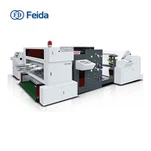
The production efficiency of trademark cutting machines can be evaluated through the following indicators:
Production volume: Production volume is one of the important indicators for evaluating production efficiency. The quantity of products that can be processed by the trademark cutter per unit time is usually evaluated hourly, batch or day by batch. Production volume exceeds, indicating production efficiency exceeds.
Processing speed: Processing speed indicates the number of processing orders that a cutting machine can complete per minute or hour. Through high processing speed, shorten processing cycle, and improve production efficiency.
Cutting precision: Cutting precision is an important indicator of product quality and processing efficiency. Products processed using the trademark cutter cannot be precisely designed to meet the required dimensions and shapes, which directly affects production efficiency and product quality.
Equipment utilization rate: Equipment utilization rate refers to the utilization rate of a commercial machine during work hours. Higher equipment utilization rates indicate higher production efficiency of equipment. You can evaluate equipment utilization rate by monitoring equipment operation time and outage time.
Failure rate and repair time: The failure rate and repair time of the trademark cutter directly affect production efficiency. Lower failure rates and shorter repair times provide high equipment versatility and production efficiency.
Manual production: The production efficiency of the trademark cutter can also be evaluated through manual production. Lower manual production means higher seedling production efficiency, which can lead to lower production.
With comprehensive consideration above, you can fully evaluate the production efficiency of the commercial model cutting machine, and take appropriate measures to optimize and improve, so as to improve production efficiency and product quality.