


Why Choose Us?
Rich Experience
Zhejiang Feida Machinery Co.,Ltd is an enterprise which focuses on research and development, manufacture, sale, and after-sales service of Full Automatic Roll Flatbed Die Cutting Machine, Embossing Machine, Creasing Machine and Stripping Machine for Eco containers.
Reliable Product Quality
In order to meet the needs of customers, Ruian Feida Machinery Co.,Ltd always perfects the varieties and improves the quality. There are two series of products, Full Automatic Roll Flatbed Die Cutting Machine and Full Automatic Stripping Machine, which reach the domestic advanced level.
Wide Market
Feida Company has passed the certification of CE and the certification of Import and export permit. Our products are welcomed not only by domestic customers but also exported to USA, Greece, South and North America, Mid-est, Southeast Asia and many other countries and regions.
Professional Technical Team
The professional sales team will assist customers to do the product size layout, waste rate generation, and output calculation to analyze the customer's professional needs, recommend the equipment that is most suitable for the customer, and maximize the benefit of the customer. So that our products can meet the needs of users to the greatest extent.
What is Ci Flexo Printing Machine?
A CI flexo printing machine, also known as a central impression flexo press, is a special printing press with a high output capacity and a high quality of printing on a wide variety of substrates. In contrast to the in-line flexo press that has multiple impression cylinders, the CI flexo press has a large central impression cylinder that is the main component of the printing process. This central cylinder is the core of the press and it is surrounded by a number of print units, each equipped with its own plate cylinder, anilox roller, and ink chamber.
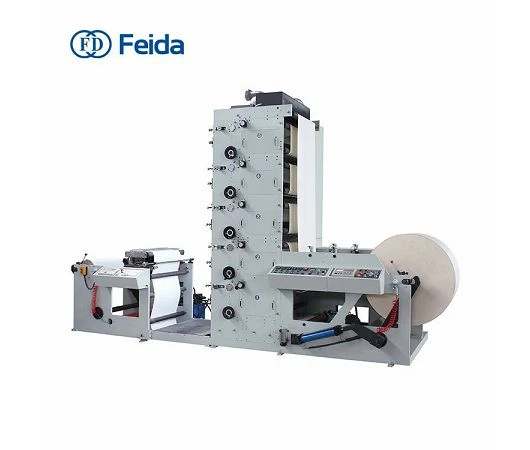
Stacked Flexo Printing Machine
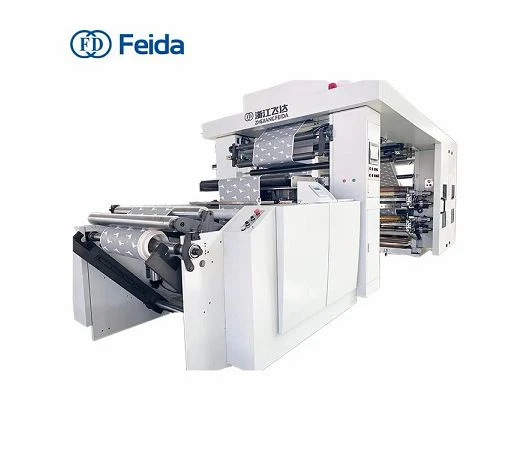
The stacked flexo printing machine can achieve the effect of double-sided printing, and can also carry out monochrome or multi color printing. It can be printed with various materials of paper, even in the form of roll or self-adhesive paper.
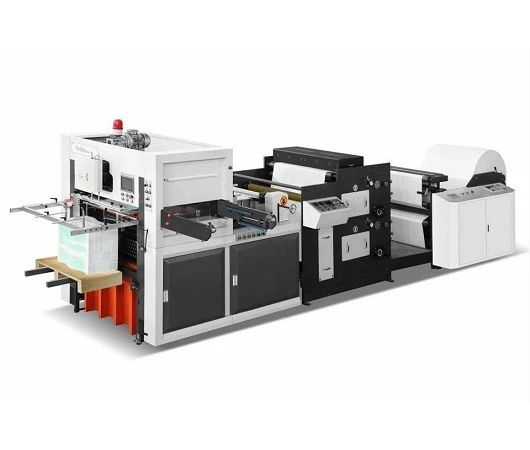
Roll Die Cutting With Printing Machine
Die cutting machine contains one wooden cutting board for free. Roll die cutting with printing machine die cost is low,and easy replace mold , suitable for all kinds of paper products, can do all kinds of indentation line. Connected printing can operate two machines by one person, saving labor costs.
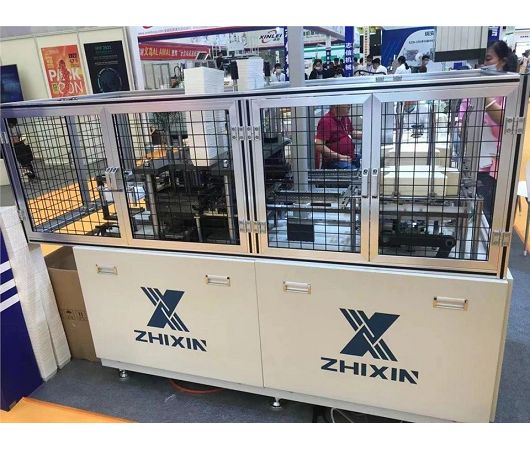
Edge Rolling Box Molding Machine
Automatic edge rolling box molding machine is an automatic paper product molding equipment, has the advantages of fast Speed, easy operation, etc. This machine adopts its own hot air generating device, suitable for single PE coated paper. Through automatic paper feeding, heating, hot pressing molding.
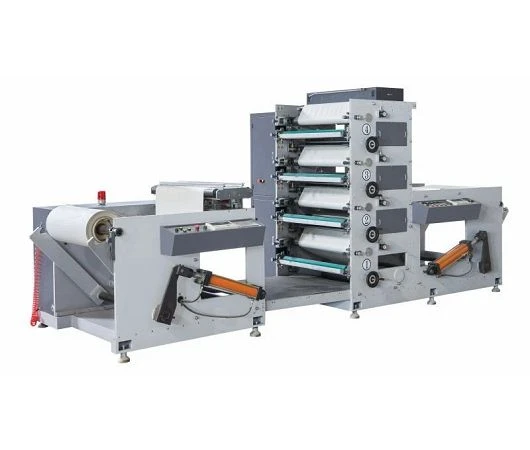
Max unwinding diameter 55inch(1400mm). With 3 inch roll axis core, including Automatic web guiding Device. correct the position of paper automatically. With paper binding table and hydraulic lifting paper shaft device,and with Auto tension controller system.
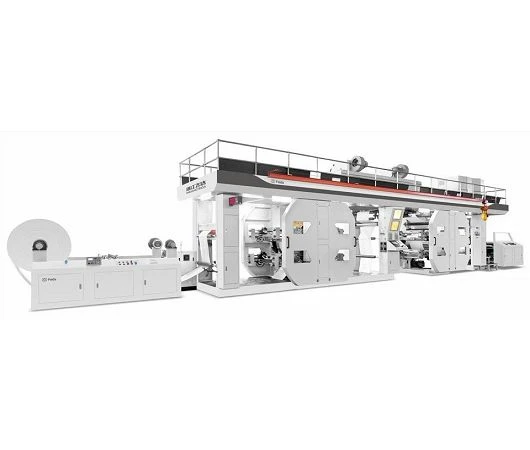
Plastic film printing machine equipped with 3 inches air shaft. The maximum diameter is 1500mm. -The mandrel support structure is fixed on the base to realize the positioning of the material roll Hydraulic up and down.
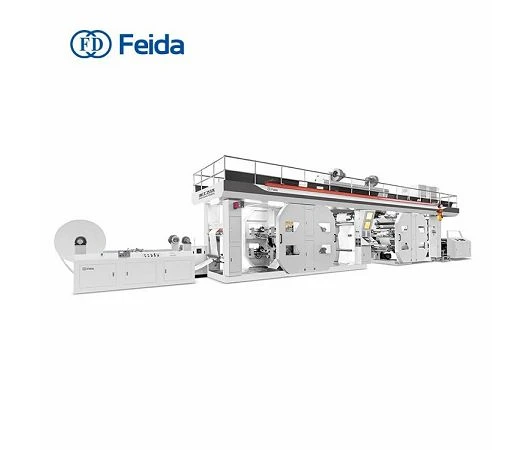
Plastic Paper Printing Machine
The machine has 12 months' warranty since the date of buyer's receipt of the machine. --The seller should be responsible for providing the exchange of new spare parts (buyer pays the postage cost) if the spare part damage during the guarantee period (excluding the quick wear parts or human factors).
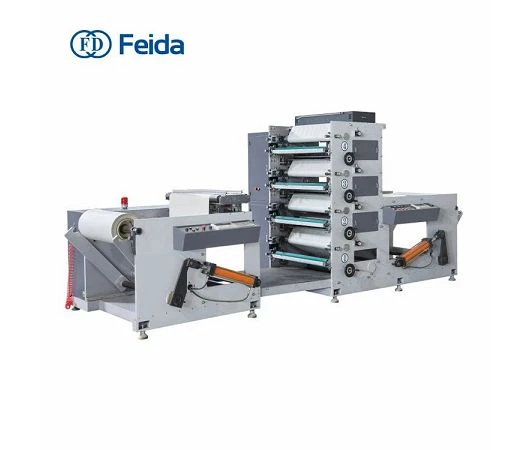
Hot Drying Press Printing Machine
Hot drying press printing machine's Max unwinding diameter is 55inch(1400mm). With 3 inch roll axis core, including Automatic web guiding Device. correct the position of paper automatically. With paper binding table and hydraulic lifting paper shaft device,and with Auto tension controller system
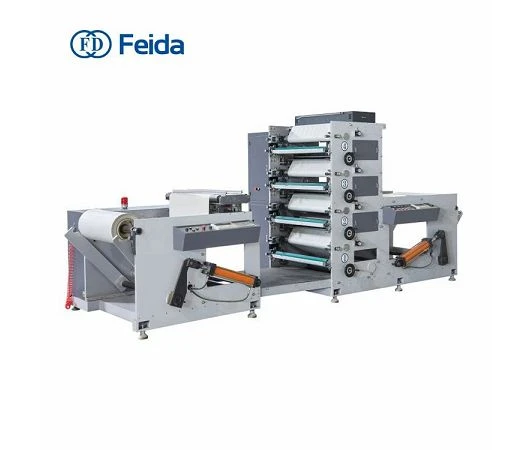
Water-ink printing machine is using for paper products which function for water ink printing efforts,it can makes different colors and images .water-ink printing machine follows customer choice of color units.
1. Sea/Air Freight cost &Insurance: to be effected by the buyer.
2. Package: standard exporting packages.
3.Delivery time: 90 working days after receiving the down payment.(to be postponed if meet legal holidays)
4. Payment: 100%TT: 30% down payment, the balance 70% to be paid before shipment.
Advantages of Ci Flexo Printing Machine
1. Versatility
Ci flexo printing machine can be used to print solid colors and patterns on a wide range of substrates, including materials that are porous, non-porous, flat, rough, absorbent and non-absorbent. In addition, if a C.I. configuration is used for the print setup, it allows for superior color-to-color registration on extensible substrates.
2. Wide variety of inks
Speaking of versatility, flexography allows the use of numerous ink types for the printing process. They are also chosen according to the type of application and the processes that follow the printing (heat sealing, lamination, etc.). However, it is crucial to select the ink primarily on the basis of the final product you want to obtain.
3. Performance
Ci flexo printing machine is known for being a fast process. Once the initial setup is complete, the combination of quick-drying inks and automation result in very high performance. In addition, this method gives you the possibility to preset the amount of ink used in the printing process. Thanks to the doctor blade chamber, only the necessary amount of ink will be applied uniformly on the printing plate, minimizing ink consumption (as mentioned above), saving resources and reducing process costs.
4. High quality image reproduction
Despite the high speed of the Ci flexo printing machine process, over the past decade, the quality of the images that come off a flexo printing press have grown to match that of rotogravure printing. Past image problems, like the halo effect or dot bridging, have been replaced with images and text that are clear and detailed and colors that are bright and crisp. This improvement in print quality is thanks to the newest developments in flexo printing technology. With finer anilox line screenings, improved inks, repro tools that can create sharp shadows and highlights, and better plate exposure and ink transfer, the images obtained are of the quality that consumers expect from a top of the range product.
5. Low production cost
Flexography printing has lower operating costs than other printing methods. This is due to the lower cost of materials (the ink is less expensive and the plates are cheap to replace), the durability of the plates (they last for millions of impressions), and the lower labor cost given by the fewer steps needed for the printing process. Furthermore, there are now technologies that help reduce the waste of material that usually occurs whenever a setup change is made or whenever any necessary setting is not stable or set precisely.
6. Eco-sustainability
Since the printing industry is usually under scrutiny for its negative effects on the environment, flexography provides the needed tools to address this growing concern. In fact, this method reduces the reliance on platemaking solutions, solvents based inks and cleaning materials that contain Volatile Organic Compound (VOC). Given the fact that in many areas of the world solvent-based inks are being banned, the capability of obtaining high quality printing using water-based inks is an advantage that cannot be underestimated.
Application of Ci Flexo Printing Machine
The core applications of CI flexo presses predominantly lie in the packaging industry and label printing. In the packaging sector, CI flexo printing machines are indispensable for producing high-quality, visually appealing packaging for food, beverages, personal care products, and pharmaceuticals. The technology's ability to print on a variety of substrates makes it ideal for flexible packaging, such as pouches, bags, and wraps, which require durability and food safety. Label printing is another area where CI flexo presses shine, providing crisp, vibrant labels that can withstand environmental factors and handling. The adaptability and efficiency of CI flexo printing make it a backbone technology in these industries, driving innovations in packaging design and functionality to meet the requirements of the most demanding package printing applications.
Structure of Ci Flexo Printing Machine
Unwind Part
In the unwinding part, it is usually equipped with an air shaft clamping material (shaftless unwinding can be selected when the substrate is heavy). An automatic tension control system is used to ensure the tension of the substrate during high-speed printing, and a web guide system Ensure that the orientation of the substrate does not deviate. The traction mechanism is used to drive the substrate forward and control the printing speed.
Printing Part
The most important structure of the satellite printing press is the printing part. As shown in the figure, all printing units surround the central impression drum. The impression drum adopts a double-wall structure, which is beneficial to the temperature control of the impression cylinder. The surface of the impression roller has a nickel-plated protective layer and is equipped with a water circulation system. To keep the outer surface temperature of the impression cylinder constant and prevent the impression cylinder from thermal expansion. Each printing unit is composed of an automatic ink circulation system, a scraper, a ceramic anilox roller, and a plate roller. Generally, electric pressure registration device and hydraulic mechanical auxiliary pressure adjustment are used. generally equipped with a real-time printing quality monitoring system that can monitor printing quality defects in real time.
Dry Part
Each set of printing units is equipped with a set of independent drying devices. After printing is completed, the substrate is dried in the centralized drying unit at the top. For some substrates whose temperature rises and causes deformation during high-speed printing, a water-cooling roller can be installed to water-cool after printing and drying to prevent the substrate from deforming. Natural gas drying, hot oil drying or UV drying can be selected according to customer needs.
Rewind Part
After drying is completed, the material can be rolled up and is also equipped with a tension control system to ensure stable material tension. Some high-end CI flexo printing machines are also equipped with non-stop ick roll changing devices, corona treatment devices, fire alarms and automatic fire extinguishing devices to achieve higher printing efficiency and safer production.
Transmission And Control Part
CI flexo printing machines mainly have two transmission methods, namely gear transmission or gearless transmission (servo transmission). Gear transmission means that each group of printing units is driven by the large gear of the central impression drum. The central impression drum rotates, each printing unit also rotates. gearless transmission means that each set of printing units is directly driven by a servo motor. Compared with gear transmission, a CI flexo printing machine driven by a servo motor is more stable, has higher color registration accuracy and higher printing quality, but the price is higher than Gear-driven CI flexo printing machine.
The CI flexo printing process begins with the preparation of the printing plates. The artwork is divided into separate color layers, and each layer is used to create a flexible printing plate. These plates, serving as the image carrier, are then mounted onto the plate cylinders in the print units.
As the substrate, such as a plastic film or paper, is fed into the CI flexo press, it is guided onto the large diameter impression cylinder. The central cylinder rotates, bringing the substrate into contact with each print unit in sequence. In each print unit, the anilox roller picks up a controlled amount of ink from the ink chamber and transfers it to the printing plate. The raised areas of the printing plate then transfer the ink onto the substrate, creating the desired image.
This process is repeated for each color layer, with the substrate making a complete revolution around the central impression cylinder. The precise registration ensured by the central cylinder allows for accurate color alignment and consistent print quality.
After printing, the substrate passes through the drying system, where the ink is dried and cured. The finished product is then rewound or fed into additional finishing processes, such as lamination or die-cutting, depending on the specific application.
What Is the Difference Between Ci Flexo Printing Machine and Inline Flexo Printing Machine?
Impression Type
CI Flexo (Central Impression Flexo): In CI Flexo, a single large central impression cylinder is used to hold the printing substrate (such as a flexible printing plate or film). The inked anilox rolls and plate cylinders transfer the image to the central impression cylinder, which then applies the image to the substrate in a continuous process. This configuration allows for consistent and high-quality printing across the entire width of the substrate.
Inline Flexo: In Inline Flexo, each printing unit has its own impression cylinder. The substrate moves sequentially through each printing unit, and each unit applies a specific color or part of the image. The inline configuration is more modular, allowing for greater flexibility in terms of the number of colors and the order in which they are applied.
Printing Speed
CI Flexo: CI Flexo presses are known for their high-speed capabilities. The central impression cylinder's large size allows for efficient and rapid printing, making CI flexo printing machine suitable for high-volume production runs.
Inline Flexo: While inline flexo presses can also achieve high speeds, the printing process is sequential, and the overall speed may be influenced by factors such as the complexity of the print job and the number of colors.
Flexibility
CI Flexo: CI Flexo is well-suited for long print runs with consistent print quality. It is particularly advantageous for flexible packaging applications where high-speed and high-quality printing are essential.
Inline Flexo: Inline Flexo provides more flexibility in terms of job changes, making it suitable for shorter print runs or applications where frequent setup changes are required. Each printing unit can be adjusted independently.
Setup Time
CI Flexo: CI Flexo presses may require a longer setup time due to the need to mount and align the printing plates on the central impression cylinder.
Inline Flexo: Inline flexo presses offer quicker setup times as adjustments can be made independently for each printing unit.
Applications
CI Flexo: Commonly used in the printing of flexible packaging materials, labels, and other continuous roll-to-roll applications.
Inline Flexo: Applied in various industries for printing labels, folding cartons, and other packaging materials. The flexibility of inline presses allows for diverse printing applications.
1. Know what substrate you want to print on
You can start by understanding what substrate you would be printing on. Different substrates behave differently during printing. For instance, when applied with tension a film is more prone to stretch than paper. Print ink is easier to dry on paper than on film. Foil is more prone to tear than paper and film…etc. These different substrate characteristics will require different press designs. Not all presses work with all substrates. Even when you choose a substrate that you are going to print now. It is always a good idea to think in the mid and long term. To consider what other substrate you may target in the future and will your printing press be able to support you during the product line expansion.
2. Operation
From an operational perspective, you should look into how skilled your current workforce is. Is it easy to find skilled printing operators? Is it expensive to find more help? Is it easy to train a person? These factors will affect the amount of automation that you will need in your press. Also from a facility standpoint, how much space do you have to fit the flexo press? This may limit the number of color decks that you can have and the drying tunnel capacity that you are able to consider. You should identify whether your printing press will run in line with other machines on the production line. This will affect how you decide on the required maximum press speed needed.
3. Functionality
It is recommended that you don't just go for the bare minimum when it comes to functionality. Once again, think five years down the road about how much potential capacity you might need. Just like a car, a Ci flexo printing machine can come with many additional features such as web cleaner, auto wash, auto viscosity control, auto registration and impression setup, corona system…etc. These add-ons can make your operation smoother and more efficient.
4. Quality
From a machine perspective, quality is about how stable and durable your printing press is. Try to go for a well-known and reputable Ci flexo printing machine manufacturer to ensure better quality. Furthermore, you should consider not just the press quality but the service quality as well. Will the manufacturer be able to support you at the beginning to get you started? Will the manufacturer be able to provide training for your workers if needed? How mature is the supply chain of the manufacturer? How fast are you able to obtain spare parts? Are remote diagnosis and connection available? Having a good quality press and a good quality service will really make a difference in your operational efficiency.
5. Cost
Many times, cost is the most important factor for many investments. Big flexo press manufacturing brands make you pay extra for their brand names. If you are a finically robust company with lots of extra cash, then this might not be a problem. However, if you are an SME with relatively less cash, a reputable mid-size flexo press manufacturer may be a more economical choice for you. You can reduce your equipment's function to save cost but do not sacrifice quality for cost. If you sacrifice quality for cost, in the long term the machine downtime and fixing cost may outweigh your initial press investment cost.
Operating a Ci Flexo Printing Machine: A Step-by-Step Guide
● Prepress: Prepare the artwork, create color separations, and generate high-resolution printing plates for each color.
● Plate Mounting: Mount the printing plates onto the plate cylinders in each print unit, ensuring proper alignment and registration.
● Ink Preparation: Mix and prepare the inks according to the job specifications, ensuring consistent color and viscosity.
● Anilox Roller Selection: Choose the appropriate anilox rollers based on the desired ink volume and line screen for each color.
● Substrate Loading: Load the substrate onto the press, ensuring proper tension and alignment.
● Press Setup: Adjust the press settings, including print pressure, registration, and drying parameters, based on the substrate and ink requirements.
● Print Run: Start the print run, monitoring the print quality and making necessary adjustments throughout the process.
● Quality Control: Perform regular quality checks, including color density, registration, and defect inspection, to ensure consistent print quality.
● Finishing: Once the print run is complete, the printed substrate is sent for finishing processes, such as lamination, die-cutting, or packaging.
Our Certifications

Our Factory
Zhejiang Feida Machinery Co.,Ltd is an enterprise which focuses on research and development, manufacture, sale, and after-sales service of Full Automatic Roll Flatbed Die Cutting Machine, Embossing Machine, Creasing Machine and Stripping Machine for Eco containers, for example Paper Ripple Cups, Paper Bowls, Recyclable Paper Products, Paper Ice Cream Cups, Paper Chip Box, High Quality Paper Disposable Cups, Paper Cups Blanks, Paper Cup Sleeves and so on. Feida covers 6000m2 and is capable of manufacturing 200 machines annually.

Ultimate FAQ Guide to Ci Flexo Printing Machine
Hot Tags: ci flexo printing machine, China ci flexo printing machine manufacturers, suppliers, factory, branch cutter, Flexo Mounting Machine, Industrial fabric die cutting machine, thermal printer, Automatic frame cutting machine, carton box making machine price


